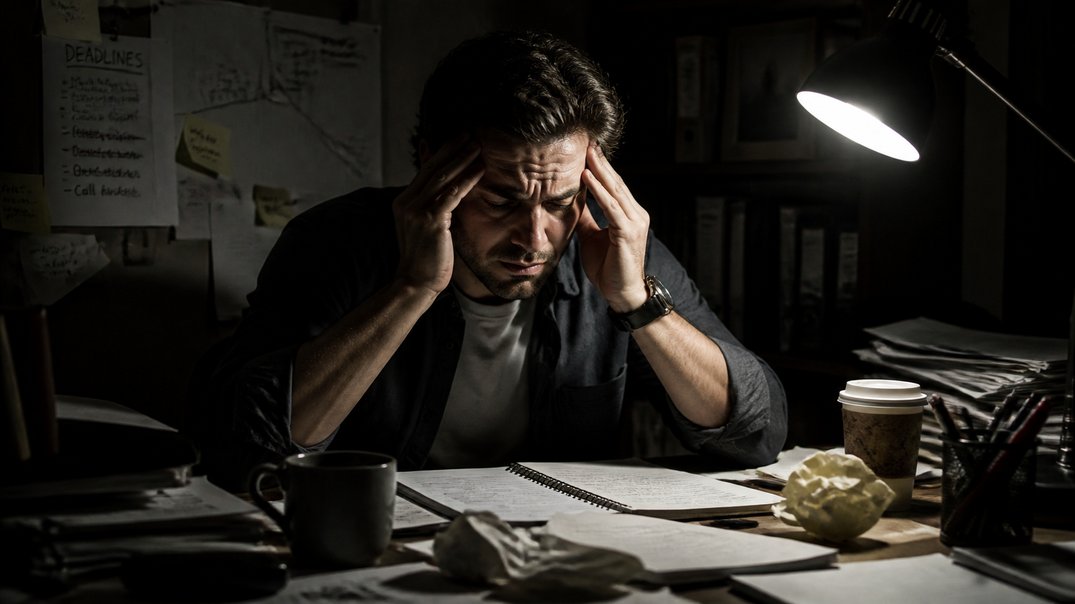
Chronic stress can cause genuinely low testosterone that persists for a long time, but current research suggests this is more accurately described as a sustained, reversible suppression rather than truly permanent damage. The underlying mechanism resembles a condition well documented in women called functional hypothalamic amenorrhea, and researchers have begun investigating whether men experience a comparable stress-induced hormonal shutdown that can improve once the underlying stress is addressed.
Here’s what’s actually understood about this condition and why “permanent” probably isn’t the right word for it.
The Mechanism Behind Stress-Induced Hormonal Suppression
Chronic stress activates the hypothalamic-pituitary-adrenal (HPA) axis, the hormonal system responsible for your body’s stress response. When this system stays activated for extended periods, it can suppress the separate hypothalamic-pituitary-gonadal (HPG) axis, the signaling chain responsible for regulating testosterone production. Researchers have described this dynamic extensively in women, where it produces a well-documented, reversible condition, and a review published in Frontiers in Endocrinology raises the possibility of an equivalent condition in men, describing preliminary evidence that a similar stress-driven suppression of reproductive hormones may occur, though it remains an area needing further research and is less clinically recognized in men than the female counterpart.
Why This Looks Reversible Rather Than Permanent
In the well-studied female version of this condition, research has consistently shown that reproductive hormone function returns once the underlying stress is meaningfully reduced or resolved. This recovery pattern is a key reason researchers describe the condition as “functional” rather than structural. It reflects the body’s hormonal system responding adaptively to a perceived ongoing threat, not permanent damage to the glands or tissues responsible for hormone production. There’s no strong reason to expect the male equivalent, if it functions similarly, would behave fundamentally differently in this regard.
Why Chronic Stress Can Feel Permanent Even When It Isn’t
The confusion around permanence often comes from how long chronic stress can persist in someone’s life without meaningful change. If a man is dealing with an ongoing high-stress job, financial strain, or a difficult life situation for years, his testosterone suppression can feel like a fixed, unchanging state simply because the stressor itself never resolves. This is different from the hormonal suppression being biologically irreversible. It’s more that the trigger causing it hasn’t gone away, so the effect hasn’t had the chance to reverse.
What Could Make Stress-Related Low Testosterone Harder to Reverse
While the underlying mechanism appears functional and reversible in principle, there are situations where recovery becomes more complicated. Prolonged chronic stress often coexists with other testosterone-suppressing factors, like poor sleep, weight gain, and reduced physical activity, all of which can independently contribute to low testosterone and need to be addressed alongside the stress itself. If chronic stress has been present for a very long time, untangling how much of the current low testosterone is from stress alone versus these accumulated secondary factors can make the picture more complex, even if none of it is truly permanent in a structural sense.
What Actually Helps Reverse the Pattern
Based on how this mechanism is understood, addressing the root chronic stress, rather than only trying to directly boost testosterone through supplements or lifestyle tweaks unrelated to stress, is likely to be the more effective long-term approach. This might include:
- Identifying and reducing the specific sources of chronic stress where realistically possible
- Prioritizing consistent, adequate sleep, since poor sleep compounds cortisol-related suppression
- Incorporating regular physical activity, which helps regulate cortisol over time
- Considering professional support, such as therapy or counseling, for stress that feels unmanageable on your own
When to Get an Actual Evaluation
If you suspect chronic stress has been affecting your testosterone for an extended period, the right move is a proper medical evaluation rather than assuming the situation is permanent and unfixable. A doctor can test your hormone levels, help rule out other contributing causes, and monitor whether levels improve as you address the underlying stress and related lifestyle factors. Given the reversible nature this mechanism appears to have, there’s genuine reason for optimism rather than resignation.
Frequently Asked Questions
Is stress-related low testosterone considered permanent damage?
Current understanding suggests it functions as a reversible, adaptive hormonal suppression rather than permanent structural damage, similar to a well-documented condition seen in women under chronic stress.
How long does it take for testosterone to recover after resolving chronic stress?
This hasn’t been precisely established in men, but in the comparable female condition, hormone function has been shown to recover once the underlying stress is meaningfully reduced, suggesting a similar pattern is plausible in men.
Can chronic stress and other factors combine to make low testosterone worse?
Yes, chronic stress often coexists with poor sleep, weight gain, and reduced activity, all of which can independently lower testosterone and may need to be addressed together for full recovery.
Should I see a doctor if I think stress has caused my low testosterone?
Yes, a proper evaluation can confirm your hormone levels, rule out other causes, and help track improvement as you address the underlying chronic stress.